Saturday, September 25, 2021

If I want the hobby to survive past me - making systems easier to learn

 I'm currently working on another book for DTRPG drawing from my Homebrewing. 

simplifying maintenance, repairs, and damage. Making one wholistic mechanic so that you can think of repairs and maintenance as almost interchangeable while - damage as more serious wear and tear. 

 Seeing Technical Debt = Damage. Using thresholds for conditions.  Reducing the Dice rolls and the number of Factors. Applying Bounded Precision (the diminishing returns of modifier and options in a situation)

One of the strange paradoxes of Simplifying a system is that sometimes we elaborate on A system, but make it apply to more areas. So our brain doesn't switch to different modes as much. 

One of the weirdest old-school sacred cows is changing the mechanics per sub-system. from D&D2ER vs D&D3+ the consolidation of the mechanics from the proficiency checks, initiative, attack rolls, saves, to be all very different to d20+modifier vs DC. 

I understand the nostalgia bomb of such mechanics, but when I'm teaching someone new or I want the Hobby to survive PAST me - I'm like WTF is this!!! I want this hobby to survive past me and teaching multiple sum mechanics when mathematically speaking we can create the same statistical odds. 

My son is 10 and I've been trying to get him into TRPGs and I've helped and taught people both in Games and for Work (QA and IT related) its really a tangible barrier for me to teach multiple mechanics.  

i get the nostalgia bomb - I have friends hard-wired for Exalted, I'm hard-wired for GURPS and D&D3E. But I want the Hobby to survive me - so just because its easy for me because i take it forganted back in the 90s there were fewer Competing distractions - this generation has so many other competing distractions that if the System took 5 more minutes to understand I can lose the audience. I have to make every Elevator Pitch intriguing and I'm not Charming or Charismatic or Convincing; I'm a plain geek. 

The system gotta be at least easy to grasp if it cannot be charming. Well at least for those who want mechanical elegance. I know that I'm not the person you go to if you want a really exciting story - I'm the guy that gets involved when there is a problem that people would need another set of eyes or a different point of view. 


Sunday, September 19, 2021

Slowly learning - Simple Rockets and how it relates to Traveller

 https://en.wikipedia.org/wiki/Escape_velocity

Q: If the earth requires 11KMs Escape velocity, when I achieve it at 11.1KMs 𝚫V does that mean I have the remaining 0.1KMs to travel?

"Once escape velocity is achieved, no further impulse need be applied for it to continue in its escape. In other words, if given escape velocity, the object will move away from the other body, continually slowing, and will asymptotically approach zero speed as the object's distance approaches infinity, never to come back.[2] "

A: Yes and No.
Yes - If I dont achieve EV, my speed will diminish.
No - If I achieve EV I continue at that speed or greater if I choose to accelerate.

Mah brain -
I keep thinking 𝚫V as a COST a of energy since If I move one direction with 100m/s I need to stop with 100m/s the opposite way.

EV is a Threshold that when passed, the gravity gonna stop it anymore.

Especially since I learned that Thrust (N) - Wt (kg*9.8) is the NET thrust used to calculate escaping from gravity. Its like I already paid the cost of Gravity because of my Diminished Accel. 

trying to figure out why my rocket won't launch. 


Discovering i need to use "Relaunch" to change to a Runway instead of a Launch pad. 
The difference of a 4MN rocket engine and a 0.26MN Rocket engine. I wish I can put rockets side by side so I can understand the scale. 

I got the simple beast to low earth orbit, but i didn't know how to steer. There is enough delta v to escape earth? This is hard. 


Saturday, September 18, 2021

Rockets and pushing my limits

 All the tools that go to delta-v to be easier goes to designer notes.  Sure write the simple parts down in the mechanics but then in practice, the players being clever will start asking questions about -  

  1. exact numbers - delta-V as mass changes - especially in CHASES. 
  2. adding boosters and extra tanks. Because these are common factors in Operational Tailoring/fine-tuning - some ships just carry more fuel. 
  3. missiles (and projectiles) and their delta-v as they are launched with an initial velocity. 
  4. more details about rockets - and different engines and benchmarks.   

And I have to layout my assumptions - and the limits of the system. As well as the opportunity to go into more fun and detail.  For me to get to where I am now - not only did I have to learn math I don't use day to day,  but find a way to fit it in - an example would be the Acceleration formula can be used for Infection or Vaccination rates   So I use the country's performance in vaccination to determine if we will spend on HVAC, acrylic barriers, air filters, KN95 for workers, etc...   in the absence of any clear plan to ramp up vaccination and testing of the gov't - what do I do as one of the company's safety officers. What data do I use to make an informed decision? Interestingly Project Management and Physics formulas are good friends and they helped me try to inform how this all works. 

Fun Tidbit. All the HVAC from my mentor and the Life Support I had to research for harder scifi applies in the Pandemic as it informs me how should we design our ventilation system? SHould the vents be at Standing Head level (which is the default ) or should it be lower like floor level - as carbon dioxide with aspirated water descends from us as we breathe? The science why Astronauts in the ISS have fans as there is no more gravity to pull carbon dioxide down from our heads and it forms a bubble around the head of the Astronaut. (We are a furniture and fit-out construction company - prior to the pandemic my mentor was the Mechanical Design manager who is also a fellow military and gun enthusiast - so we would talk a lot of science and engineering where they intersect). 

Rockets, Mass, and Acceleration are alien to me. I'm not an expert which is why I'm investing in Science Consultation (talking to my friends about any Physics background consultants who can check if I understood it properly...  and I've been unlucky. I may have to go to Upwork or Fiverr to find a consultant). But fortunately, Simple Rockets 2 allows me to test my understanding as I can look at the stats of the rockets and check if my math matches the performance there. 

The advantage of Simple Rockets is that it's more straightforward than Kerbal and the planet Droo is the same gravity as Earth. So I'm going through that tedious learning phase where I'm trying to learn a New Game and new mechanics. I'm trying to break it down into a set of instructions a Newbie, or ME when i first began, would be able to understand. 

So the Booklet which is supposed to be just a few ships (4) will have a lot of designers notes on practicalities - there is the system which is simple - Life support is X credits - but then there is the complicated one - that does Life Support factor in the Salary? If it doesnt then the total cost of ownership of the salary is actually Higher, doesnt that make a ship job with 100-500 CR with free Life support better than a ground job at 1000-2000? 

In Project Management the Assumption Log is one of the Foundational Documents moving forward. Designers Notes acting as an Assumptions Log helps the Undertaking navigate through uncertainty "No, we don't know if that area is safe to cross" instantly triggers an assessment.  Dont worry its all in the Design Notes - you dont have to read it unless there is something that needs additional clarificaiton. 

The Role of Hard Science in a GAME. 

Harder science is never taken all at once, in fact the very nature of science is best taken at its spirit "doing science when there is a PROBLEM". Quality Systems in Engineering and in Science is best done when we have a problem and a clear problem statement. We dont want to jump into something with ambiguous and unclear goals. We want a PROBLEM before we proceed to a solution. A clear problem and a clear emotional signal that "Damn this problem sucks, X would be better." And ideally the problem is in agreement with most parties if not all. BTW this is called Pull-based systems (vs Push based system if you google it) - its a great system for groceries, warehouses, inventories, kanban, and avoiding accumulating junk. 

If you start going into Delta-V in your game - it should be that the Players would rather get to know Delta-V than the Constant Acceleration of M-Drives. Or there is some aspect of the game that Delta-V would fix: like the realization that constant acceleration is counterintuitive and differences in Acceleration are large numbers when factoring 10-16 minute turns and 1-50k Km. That easily we would exceed a difference of 50k km. That Delta-V is not so bad, there are fewer exponents in Delta-V and less multiplication. 

that players who are too clever realizing that they can accelerate near light speed with a payload of missiles - can defeat most point defense and destroy planets and systems that can hold systems hostage. The GM realizing this - would find themselves taking on more work as they have to Adjudicate arbitrarily many things because a set of principles can lead to a Kessler syndrome of abuses. Stable pillars of Realistic Constants help the GM and Players build a WORLD and Stakes. It really sucks to have to throw out so much World Building every time we break some fundamental law of physics without knowing what we are taking on. 

I remember when I was world-building knowing that any ship with infinite acceleration can destroy anything - holy crap the amount of redundancy needed - deeper and deeper underground building, so much security investment for wealthy areas and backwater areas can be held hostage with rock-throwing.  that Jumps or Warp can "handwave" the biggest problem - Time Scales. of course if the Referee having to Swat down with "No cause I said so" gets really old. Leaving that "Let's agree for a Universal Amnesia that Kinetic Energy calculations would never reveal how dangerous an M-drive or Anti-gravity is. 

The thing is Traveller and Scifi are played by some people who are extra curious - but it doesn't mean curiosity is Impatient. We can add new SKILLS (delta-V-based games are a skill, approach like a skill - we are allowed to SUCK terribly at it and learn as we go) and that's great - man it feels like we are growing even in our old age. It feels like we are still that kid that wanted to know what we know now - it makes the WALLS we slam against - not so impenetrable and instead of a sign of how many Walls we've broken down and how many we plan to break down as we grow. 

It's ok to fuck up. I mean fucking up and getting frustrated at something we see as hindsight so basic makes us remember that it is OUR CHARACTER - our virtues and perseverance is what got us through it. How many times we've bashed our heads against this problem in a game? Feels so familiar because we've done this before and we overcame it and we are different and grew. Nothing feels like pushing limits than the Pain and the Frustration. Feeling like an idiot - welcome to the club - membership all those fellow nerds and geeks who also struggled - that's great company! 

When I feel like an Idiot - i remember all those other geeks and nerds struggling and who feel like an imposter. 

I may be relearning science I used to know and it doesn't make it less than a milestone. We will forget and as we grow older pieces of us will be gone and we cannot know what we lost. yet to quit or to stop trying is much more frightening - to surrender into the apathy and void - to lose that spark before our heart stops beating is far scarier. I think of all those who depend on us for that spark, to keep theirs going and the other sparks and struggles we see. 

I guess its a bit too heavy-handed of me. or too weird that my identity is tied to gaming and to science and proving to myself that I can learn enough about rockets to run a game and make it fun for others. The guys in Kerbal, Simple Rockets, and Space Flight Simulator have done so - they made rockets fun - people buy those games - I think we are those guys who will show how it will be fun in a NARRATIVE setting. In a Story how rockets work and how the Heroes of the story figure out how to MOVE their world. 


Monday, September 13, 2021

Less Rolls, Uncertainty for the GM, and more focus on Reading the Players.

if the GM is fast and loose about the success of the players action to action, how can they create challenges or engage the players? I think it's by reading the players and giving them the opportunity to pursue what they want - (note not giving them what they want, give them the opportunity to take the actions toward what they want).  


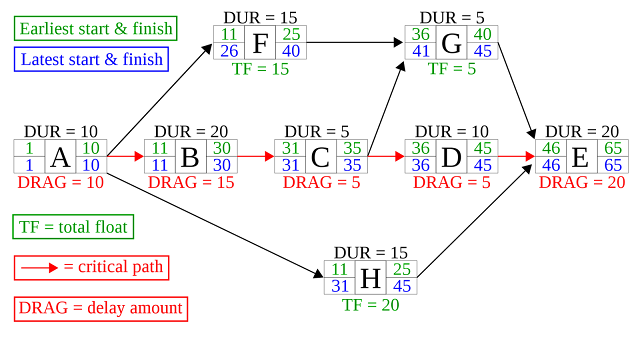
The gumshoe system is making me rethink success rolls. Particularly if anything moves the story forward. Activity on Node or A Network Schedule Diagram is a visualization of Actions and their relationship. Actions can be the same as story events. 


It basically creates a AON that doesn't have risk where you have to think of any alternative paths. Which is MUCH EASIER on the GM. You end up simplifying it like this. 

RISK points are where the story diverges instead of where STOPS. 


Visualizing the Planning of a Game as a simple chains of actions/events with diverging paths - that these paths need only be engaging to the players (Quality based Approach) - it doesn't have to fulfill any other unnecessary criteria. 

In Gum Shoe - all the data on the Investigation is Present the Players just need to process it. It doesn't have to be limited to Data - all the actions can succeed if the Players can use reasonable or low risk actions - aka Tedious Work - the rolls and risk come in at the decisions Points when the Stakes have Risen. 

The GM allows the Players to take Actions - to move forward. Even if they can succeed in most obstacles they have to choose a PATH, they cannot take All paths simultaneously. This is how to engage the players without having to  worry about the GM side implications if the PCs do not succeed. 

Bounty hunter is a dice lice RPG where players are limited by the number of Actions they can take. 

If you are worried about the Players steamrolling through everything, it's about setting Expectations about the SCALE of the success and the scope of what the game and character can do. Basically, the stealthy rogue will succeed in the stealthy rogue things but will only have a Scale and Stakes as high as their level or established capabilities. Stealthy rogue stealing stuff in a town, vs stealing the Dark lords jewel are different in scale. 

This is meditation and reflection how to more easily run games. Why not succeed. 


Sunday, September 12, 2021

Being that Annoying Pedantic Guy - Role Playing Operations

I dont know how many people need things to be in a System - where relationships and key terms are established. I like tweaking game systems that I bring it in the context of the Real-world. 

 In PMBOK, IT, QA, Construction and Manufacturing the following are KEY Terms I find in how I run Traveller games  when talking about Ship Operations:

  1. Defect Repair
  2. Work Arounds
  3. Rework 
  4. Preventive Actions.  
  5. Corrective Actions
  6. Different types of Maintenance
  7. Refurbishing 
  8. Upgrades
  9. Machining 
  10. Designing
  11. Cross Training. 

Cross Training. The more you are at a lower economic level of self-sufficiency the more Multi-Disciplinary one tends to be. IT and Tradesmen tend to learn A LOT of each others jobs. Because of Economic Necessity. Specialization is a Luxury and economic factors bear down on us like gravity - people being multi-disciplinary and self-sufficient. Specialization is the Exception but multi-dsiciplinary is the rule. 

I'm weirded out that Crews that are SO SMALL don't realize that their lack of Cross-Training increases their Fragility. 3 man crew needs to be freaking cross-trained. Everyone in a 3 shift day is doing everyone's job. 

Yes the Engineer will suck at piloting and navigation, but he wont get better until he gets practice and feedback. The Pilot is going to suck doing maintenance, but he doesn't understand the consequences of his resource decisions unless he understands its impact on the engine. The Navigator would suck doing the Administration and Expenses Tracking - but that is context what Celestial Systems they will go to. 

When I been told by people that they want to specialize there was a hidden context that they want to be in SILOS - they don't want the other departments to bother them. I get that but that's not how to world works. If you have ONE skillset one value is severely limited. I'm the son of the owner and I have to juggle IT, manufacturing, construction, Diplomacy, and Creative work. If I want people to have Work-Life-Balance they should work with each other to Make Time by having Cross-Training so someone can go on Leave, People can work together since they have the same skill to tackle the problem, and they can Get Feedback from each other if there is something they missed. 

Imagine if Everyone cannot do everyone else's - so the Pilot Cannot Check the Engineers Work, act as a second pair of eyes, the Engineer cannot Check the Navigator's calculations etc... Having no one to Check is a really terrible system. 

I don't know where people are expected to just do a Job and by themselves, they can tell if its Good or Works when So Much of the Disciplines Called Requirements Management is about FEEDBACK. Heck QA is all about Feedback as well. Where did these Strange unsustainable and unrealistic assumptions come from and Why did I get fed this Bull Crap or Why do I see it in Some System Assumptions. 

Redundancy is very important because of Concepts of Rework, Defect Repair, and Human Factors. 

"Repair" in battle is not REPAIR but Work Arounds. Temporary repairs that cannot be sustained for long periods. 

I check the Purchase Requests, the bill of Materials, the Designs and plans and I'm a Media Graduate lolz. I come from an Arts Degree. I pull up the log Files and check the log errors with Google. 

Its just weird watching Essential Craftsman and IT and Science shows and remember the SILO bullshit. 

Reminds me about the Bullshit about having an R&D department and the mistaken assumptions many people had about what is R&D. much longer story. 

Imagining I was 20s and the GM rewired how I saw the world when I was taught TRPGs. 


Saturday, September 11, 2021

Its Great, not perfect, but that doesnt stop it from being Great

 When I tweak a system typically I do the following:  

1) lessen the steps - I map out the flow chart and try to clarify the goals of each step and see if I can achieve it with less steps.  If the process was written in paragraph form I break it down to bullet form steps to make it more discrete per step. If the steps are SPREAD OUT through the material I consolidate it ALL and give page references to all relevant mechanics. 

Example is the Variant Rules which reduced the number of Modifiers through Logical Groupings. Applying Bounded Accuracy and Process Based (Inputs, Controls, Outputs) approach to Rolls. 

2) reduce the number of options but make it more flexible - less text and option to study - use broader language or use technical categories OR increase the number of Options but consolidate them in a table or Break the Option down in to Logical Groups so that its easier to remember. 

Example. In my Variant Rules of CE I had to increase the Options because of Superiority in Firepower, Strategic Advantage or Position, Numbers required Options that Divided resources and the opposing force's resources until the smaller side has the advantage of Mobility or Decisiveness. 

3) illustrate or create diagrams and examples of how it works at both the player level (what they need to start the process, the inputs and results) and gm level (who will improvise or plan this).  

Typically I put this in Designers Notes - SO you have  a bunch of mechanics - what was the design intent, how simple or elaborate was it supposed to be. How can we scale it down to essentials how do we elaborate on it for variety. 

4) benchmark against expectations. 

Like I discovered the dimensions of the missile in Ce and MGT2E is similar to the patriot missile at 3m long x 0.4m diameter with an endurance of a 3mins at 2-3G but has an endurance of 1hour and accel of 10G.

Or the small Modular reactor (SMR) is 300dtons producing 50Mw against a nuclear sub which provides 300MW. That there is diminishing efficiency as the 300dton SMR gets smaller. Comparing it to a Radio-isotope Thermoelectric Generator (RTG used in many probes and satelites) of 470W at about 1/30 a dton or 0.5 a m^3. 

Getting the Saturn V Apolo, Shuttle , Falcon Heavy, TianHe Programs Performance as a baseline for the TL8+ performance. This is because I want to help people run a 2050 Campaign where they are the growing number of Professional International Astronaughts that will be taking on the building of the first Permanent Commercial Space stations and Infrastructure - like in the Novel of Daniel Suarez Delta-V. Running games where PCs have to roll to succeed in using millions worth of Capital and high stakes projects. 

Play Testing with Nicco and the guys the material, comparing the System as Written and the problems that comes up. Designing material to make the GMs prep small and making every investment of time. I see something that can be done and take action. Reminds me of Seth Skarkowskys reviews - its like its a Great Material, it has these problems, but these problems doesnt stop the material from being GREAT! Traveller has Great material, it not perfect, but being imperfect doesnt stop it from being Great. 

We acknowledge the imperfection and act on it. It doesnt diminish the work and love that went into the work.  


Thursday, September 9, 2021

To write Game Material that makes it easier to have Fun


When I wrote my tools in conducting Narrative Combat, Adrian (My editor) taught me to put under Designers notes. One of the things I think about is that this writing has to give the reader Tools - tools they may or may not pick up, but Tools they can run something I'm confident in running. 

I really hate getting the rules wrong, I hate misunderstanding them or they're more work than necessary. As someone who has experience training and setting up controlled processes - I agree with the System Design Philosophy of managing the Knowledge of the System to be digestible and prioritized. 

my younger self would think I'm giving up, but I have to explain to him that "How do you hope to control the uncontrollable? Is that a practical use of your resources and attention?" The idea of what we can manage is different and more nuanced as we get older. As we get older we don't see what we do has a Direct Relationship to our output we appreciate all the factors that can get in the way of controlling the outcome. Accepting the limitations of what we can control, to free up that mental resources to be Flexible, Improvise, and Seize Opportunities and Manage Risks. 

A different Strategy, doing something entirely Different to Achieve the Same Goal looks like Giving up. 

The difference between Scope Creep and Scope Management is when we check our Initial Objectives and rationalize the new information in the context of our Initial Assumptions and ideas. 

I had some re-alignment as I realized that my problem with running in a more Controlled Processes (by controlled, there are Factors that are being monitored to ensure CONTEXT can show us how to achieve our goals).