Showing posts with label System Mechanics. Show all posts

Tuesday, May 17, 2022

Software Progress many problems - but art and the book is for Completion

I figured out how to do the software if it has to be on my own. My real problem is the dice which I forgot how to code. As well as I dont know how to make the loop that creates Keep High or Low Dice. 

So I hired some OJTs to set it up and there is a 10-20% chance of success, even with a senior developer guiding them. So I'm going to use the extra capacity of our senior developer (paid of course) to help with the project. Of course I plan to open source everything. This would probably cost me a huge sum. 

So Far What will people get:

  1. First off A set of rules to build A Solar System procedurally and its inhabitants Culture and Political and economic condition. DONE, art and layout is finalized.
    1. Power Structure and Source Based 
  2. d66x6 Culture Feature Table - we identified 36 cultural features and 6 variables these cultural features can manifest differently. The goal is that the GM can use this to describe the inhabitants.  
  3. Blender File to Proceeduraly Generate Planets as a 3D object they can use and Icosahedron 2D Map. Plus a youtube video how to use this.  
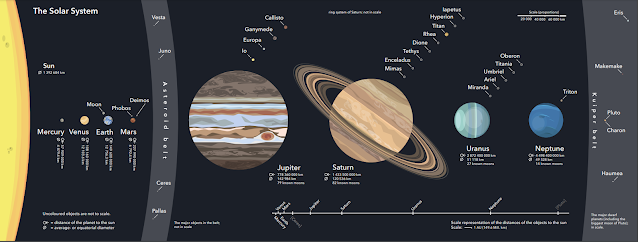
  4. 2D Solar System map Inscape/Adobe Illustrator FILE with Delta V budgets of our Solar System. 
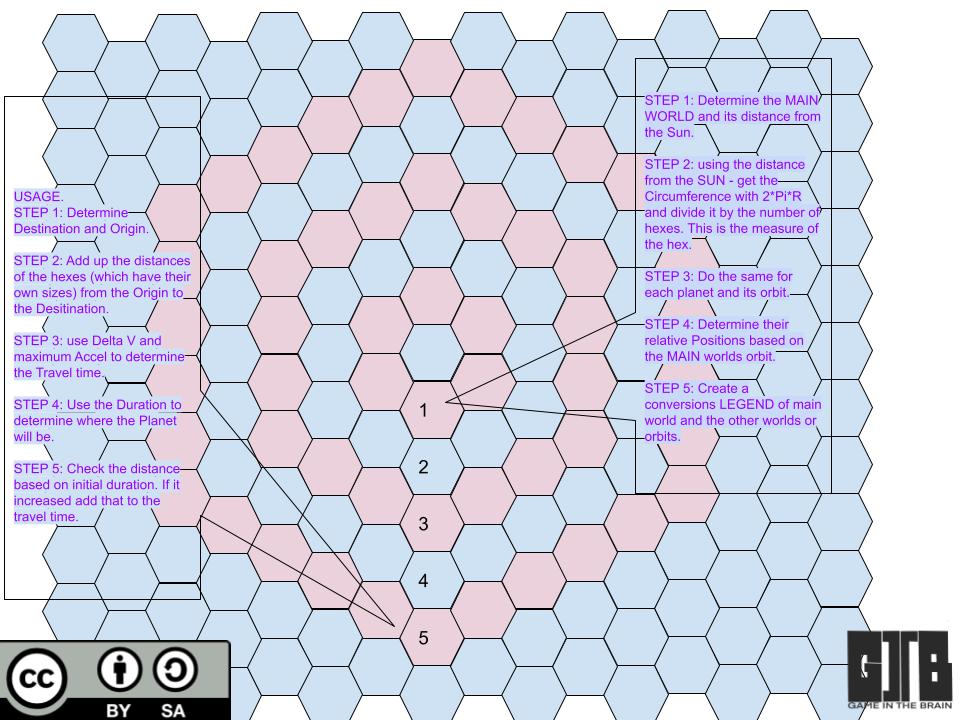
  5. Hex Map of our Solar System which has a Variable Hex measure depending on the Position of the Hex Ring (so some hex rings is the Circumference of the Position divided by number of Hexes in that Ring)
  6. Last the Google Sheet that allows the Generation of the Solar System in a few Clicks. Plus all the notes and Flow Charts we used to create it. Plus our notes and commenting so that people can alter the sheet to suit their own world building requirement. (To follow). 
Target price is probably 10usd. To break even I think ill need gold 😅. 

Who would want this Book and all its Products? 
  1. Someone who is new to Scifi and Wanted something easier that the most dense World Building Books, someone who can handle 2 orders of complexity than the Current Cepheus Engine World Building System. 
  2. Someone who will prepare the Worlds for their Players to Visit - not just grab a world from google image search but would probably render and tweak the world so its truly theirs. 
  3. Someone who will use the Delta V maps - print it out on a TARP or on a VTT on a LARGE display and Insert their Artificial Habitats, Stations, Defenses Infra on the map since the Illustrator/Inkscape file is included. 
The products and materials are so Open, Nicco is going to produce his own version of the Maps with his world building in it. He can generate all the planets and details because all the templates are there for anyone to use. Hope anyone who finds the tools useful could show us any challenges of the material. 

Well make a discord for Customer Support - if anyone needs us to help with any changes and problems with the books and materials. 

Tuesday, March 15, 2022

+3D6 Roll but Keep either HIGH or LOW 2 dice is better but harder to communicate.

 I realized in 2D6 adjusting the Roll & Keep (roll 3D6 Keep High 2 or Low 2) is just pretier but hard to communicate. 


Advantage: Any Value Can still happen but we adjust the Bell Curve or Weight Distribution of the odds. 

So if I have a Level 4 Skill in Cepheus Engine and roll 6D6KH2, but i have 5 levels of Disadvantage  I will NET roll 3D6KL2. 

Question: Then what is the Function of adjusting the Target Number? 

Answer: Fine Tuning, the Refree and Players can adjust the Odds in the Give and Take of crafting the scene. Target Numbering being the Default and ADV and DIS being a significant increase while TN having a smaller yet still tangible outcome. 

So a 3-7D6 keep H/L2. will still be TN 2-12. 

https://anydice.com/program/27250

https://anydice.com/program/276a1  

output [lowest 2 of 6d6] named "6d6kl2"
output [lowest 2 of 5d6] named "5d6kl2"
output [lowest 2 of 4d6] named "4d6kl2"
output [lowest 2 of 3d6] named "3d6kl2"
output 2d6
output [highest 2 of 3d6] named "3d6kh2"
output [highest 2 of 4d6] named "4d6kh2"
output [highest 2 of 5d6] named "5d6kh2"
output [highest 2 of 6d6] named "6d6kh2"


Wednesday, February 9, 2022

Hex Orbits Prototype - future project.


Just thought about it today. making it creative commons just in case. 

Basically how to make a hex map of a solar system so that moving orbits can be factored. 

  1. Set MAIN WORLD Orbit. set the AREA of the orbital band - circumference in AU divided by hexes. Position the MAIN WORLD or main worlds PRIMARY (if main world is a moon). 
    1. Do this for the other worlds getting their circumference by getting its distance from the Sun as the radius = 2*pi*R.
    2. Circumference / Hexes. 
  2. then set the OTHER WORLDS relative to the movement of the MAIN WORLD. if main world is ORBIT 4 and for every hex move (or fraction of a hex move) of the main world, how many hexes the other worlds move.  
  3. Create a Legend of the Conversions of the PRIMARY world to Other worlds, you can also make the conversions back to primary world. 
  4. You can apply this FRACTALLY in PLANETARY systems like Jupiter, Saturn, Earth etc and its MOONS (Or space stations) with the PRIMARY being the center and the Satelites being in their own rings. 

I'm going to commission Nicco for this along with a comprehensive guide to some of our pregen Solar System based on the wikpedia sample 
https://upload.wikimedia.org/wikipedia/commons/6/64/Solar-System.pdf  by Beinahegut 

the art will be creative commons as well for ease of sharing (so that nicco can also get commissions). 

Nicco can also do the calculations and knows his basic astro science which makes it a very good partnership. 

After the Ship Building (target September-Nov) Hope to make scenarios reminiscent of Children of the Dead Earth. Players travelling for Weeks to a destination where they can see where they're going but have so much SPACE that if something were to intercept them it would calculate their Delta-V budget and send drones to eliminate all their Delta-V budget options. The strategy comes in how much of the ships profile is knowable and what hidden counter measures the ship has in store. 


Monday, February 7, 2022

The world you land in - Different ways at looking at World Generation

 One of the reasons I shifted from the classing World Building system to TL, Development, Power Structure, Power Source, instead of Gov't and TL was because as a Developing world Person - when I traveled to HK, Taiwan, SG, US, and EU - that was the first thing I Observed and felt when I arrived. 

I wanted to shift from the Old model to the Model I Noticed. It doesn't matter what the "Gov't" called itself - are the people empowered, disempowered, apathetic, optimistic, etc... You can see it aggregated - Idealism and optimism eventually create a kind of tragedy of trying to do what is good, vs the pessimism of never trying and the death spiral and self-cannibalization of so risk-averse that nothing can be tried. 

The world and people can call themselves "Austere" "Holy" "Democratic" "Virtuous" etc... but in the end of the day when we measure their quality of life we see something we can see when we land on the planet and deal with its people. 

Wanting to do good with Imperfect information will always lead to tragedy, errors, mistakes. Uncertainty is not a very argument for not trying. 

Its like Mono-climate/geography Planets in our scifi - its a wrong idea that we got used to. World don't work that way, unless the world is really small the range of temperature, atmosphere, and conditions can very much vary.  

Now that a generation of gamers and storytellers grew up, loving the old but learning it can be better - why not gamify these concepts we learned in our various Professional Ideas but simplified in a way that its accessible. 

To improve on a system is not saying what came before was bad. The way I cant say that the morales of the next and previous generation is a certain way without the CONTEXT of the circumstance. With the Context of the Information Age, the accessibility of new and better mental models make it only inevitable that some bunch of gamers say "Hey that's Gameable!" with stuff they learn in their professional, practical, and academic studies.


Friday, October 8, 2021

Probability and Gaming - Additional Actions for Success

 So a lot of my work is the inspiration for my Gaming, one of the Risk Management concepts that affect my understanding of Game Probability is Actions that Address Risk. 

So growing up a lot of games was : Roll => Fail you just FAIL or => Succeed and succeed. And any simple observation of real life is that 

  1. Failure is not always an INSTANT and DIRECT feedback.
  2. We can Retry, Failure means taking Longer and Spending more than Expected or Others.
  3. Success may simply be not making the same amount of Failures as the Other Party OR not the same Degree of Success. 


  4. That Degrees of Success/Failure is the nitty-gritty of everyday life. That: if we are trained and conditioned to it - We see things not in the Success or Failure of the DICE, but the degrees of success and failure and how it looks in THE BIGGER picture. 
    1. Someone who's managed to FAIL a little less than Everyone to succeed over all has been primed in our intuition and allows us to Feel Gratitude and Hope. 
    2. That we count our SMALL WINS, we succeed in small things and we Count the margin of Success even if the scope is small and meager - again our Sense of Hope and Gratitude is primed for us to get that optimism where we can. 
  5. Rework, Technical Debt, Workarounds, are Key Concepts in Understanding Margin of Success and Failure in the Context of Overall human experience. 
    1. We may have to do a lot of Rework, like writing our book, doing our job, etc... some tasks are really uncertain and requires so many Tries. 
    2. Troubleshooting is an exercise of REWORK as we go through a LIST of possibilities over and over again in a Problem to Eliminate all possibilities and discover its root cause. 
    3. We Take ON Technical Debt if surviving or getting the small wins we need allows us to TRY AGAIN. AGILE or Adaptive Life Cycle project management is securing Funding or Wins that validate the Endeavor by delivering usable solutions to the End-user but GAINING more and more technical Debt - with the strategic goal that we deliver Enough Wins to survive and utility to the End User that the system is NET POSITIVE for the end-user even if a different perspective there is a much better way to do something NOW that we Know (Hindsight bias). 
    4. Workarounds - the temporary fixes that give us technical debt and add more and more to our load is part of the RISKS and challenges. 
Sadly it was Trial and Error that taught me how to Use a Risk management system - that a RISK management system boils down to ACTIONS to affect Probability. No one explains it that way - no one explains the Cost-Benefit of Risk Management - they often explain it as an Absolute - that Accepting a RISK is never an option - its one of those Empathy Exercises that show why there is a system of POVERTY - when I realize I have actions and resources (like Credit, a Car, a Home) that reduce uncertainty to my outcome I look superior to a person who doesn't have these resources but if I remove them I feel immediately the suffering and uncertainty of others. 

Does the GM or Gamer need to know the Probabilities: NO. 

What is the Outcome or Benefit in Knowing the Context? 

You can measure the Outcome or Benefit in what Actions I can take knowing this Information. You can measure information by the ACtionability. 

I know I can narrate a Success, Failure, or the Huge Gap in between success and failure and how it relates to the Character, stakeholders, the Party, the NPCs because I know the Context of Risks, Uncertainty, and Systems affected. I can tell a story that shows the Actions of the PCs affect their party and the world around them. 

On the Extreme end (as a control), Run a game without any Consequence or Impact on the world and measure how satisfaction of the Players or the GM feels when nothing affects Anything. a NPC does not influence a PC and a PC doesn't influence the world. 

Now run a game where the Decisions of the PCs have an unforeseeable but TANGIBLE effect on the world. In the SPECTRUM of agency and affect on the STory and the world - which would you rather play? Which would you have fun with sitting with friends or fellow players in an afternoon or evening of storytelling?  

How does my Doing X affect the Party, NPCs, the world, etc...? What is the context of my action in its probabilities? Am I the first or one of the many who tried? How am I different? 

In the end of the day we want to enjoy the game - and some Actions (through knowledge of options) increase the Likelihood we will succeed with diminishing returns. that balancing act becomes easier when we know the factors better and can control some of them. We manage the risk of having an unsatisfying game with knowledge that has diminishing returns. 

Saturday, September 25, 2021

If I want the hobby to survive past me - making systems easier to learn

 I'm currently working on another book for DTRPG drawing from my Homebrewing. 

simplifying maintenance, repairs, and damage. Making one wholistic mechanic so that you can think of repairs and maintenance as almost interchangeable while - damage as more serious wear and tear. 

 Seeing Technical Debt = Damage. Using thresholds for conditions.  Reducing the Dice rolls and the number of Factors. Applying Bounded Precision (the diminishing returns of modifier and options in a situation)

One of the strange paradoxes of Simplifying a system is that sometimes we elaborate on A system, but make it apply to more areas. So our brain doesn't switch to different modes as much. 

One of the weirdest old-school sacred cows is changing the mechanics per sub-system. from D&D2ER vs D&D3+ the consolidation of the mechanics from the proficiency checks, initiative, attack rolls, saves, to be all very different to d20+modifier vs DC. 

I understand the nostalgia bomb of such mechanics, but when I'm teaching someone new or I want the Hobby to survive PAST me - I'm like WTF is this!!! I want this hobby to survive past me and teaching multiple sum mechanics when mathematically speaking we can create the same statistical odds. 

My son is 10 and I've been trying to get him into TRPGs and I've helped and taught people both in Games and for Work (QA and IT related) its really a tangible barrier for me to teach multiple mechanics.  

i get the nostalgia bomb - I have friends hard-wired for Exalted, I'm hard-wired for GURPS and D&D3E. But I want the Hobby to survive me - so just because its easy for me because i take it forganted back in the 90s there were fewer Competing distractions - this generation has so many other competing distractions that if the System took 5 more minutes to understand I can lose the audience. I have to make every Elevator Pitch intriguing and I'm not Charming or Charismatic or Convincing; I'm a plain geek. 

The system gotta be at least easy to grasp if it cannot be charming. Well at least for those who want mechanical elegance. I know that I'm not the person you go to if you want a really exciting story - I'm the guy that gets involved when there is a problem that people would need another set of eyes or a different point of view. 


Wednesday, April 21, 2021

Game design elements i like correcting - pointless rolls, lost player turns, penalizing cooperation, robbing success from players


1) do not take any turn away from players, if there are costs then give penalties or costs but never take a turn away from a player. Example - No-Action Conditions in combat or Lost turns in Board Games. My favorite way of correcting it - Make the condition the challenge of the PC, and give them something to roll for. 

2) you succeed you get something, if you can give little wins then GO! never have a roll that has nothing to gain, that's bad design. Example: Task Chain in MGT2, rolling a success of 0 has no benefit in the Task Chain (and Failure has penalties).  

3)  Reward Cooperation, look at the system if it Punishes Cooperation - Example. current Task Chain in MGT2 punishes cooperation. Heck- reward AIDING, if a Player sacrifices their turn to AID, automatic BONUS, no need to roll. TREAT turns like they matter! 

Simple Correction - allow Effect to Transfer to the next character in the task Chain. "Oh no, the players are COOPERATING and maxing out their bonuses" Oh Tragedy. The fucking GM/REf can just give them something HARDER to do. yeah, a group of people OVERCOMING PROBLEMS by working together "That's Broken and OP!"- 

Why do people do drills, work as a team, coordinate, talk out their problems and resolve them - could it BE that working together has BENEFITS!?

4)Effects, degrees of Success and failure matter. I realize its the GMs that learn IMPROV  who know how to make Mixed Blessings/Costly Success/Complications and Escalations - Make something bad or good depending on Context - this is a fucking important life skill - if I know when X becomes terrible or a blessing on context then I have the ability not to get Tricked/Deceived - "Outrages headline, Click Bait, etc..." is defeated by CONTEXT.   

I have a bit of a fever since the Summer here in the Tropics is at 90F and my body is getting shocked at the temperature changes. I wish i can work on my book.  

There was someone at WORK refusing work because "Thats not my Job" what happened because of the pandemic was they had to take Forced leaves because they could not justify their work hours - the department that needed their helped was overturned and have overlaping skills and capabilities. That resulted in Lost workdays during a FUCKING pandemic - WHY: because "Fuck everyone I'm here for myself". That stressed me so much I got a stomach ache and disturbed my sleep for the week. 

When i See bad systems that dont seem to reflect Working together to survive (especially given the pandemic) - Thats red flag in design. 

I'll fix it in my book, that's the thing about being NICHE - a ton of game Designers doing this Part time and Drawing from their life and experience to make a Niche product and Support their patrons. Imagine I BUY a book and I can talk to the Author and give feedback how his stuff can be BETTER! win-win! 

Sunday, March 14, 2021

Theory and Practice - the dilemma on Guides

 I hate it how its so Theoretical - having to write a guide - but in my experience PLAYING is the BEST WAY to learn - making mistakes is the best way to learn. There is so much context in a few mistakes - a mistake, when applying the limits of the internal logic - is like so many  Examples.
I know the best example is trying to predict Ideal behavior and counter-intuitive Context that changes the ideal behavior. 

Example: 
  1. When is it BEST to divide your forces? When the adversary concentrates their force - leaving an area of vulnerability. 
  2. When is this False/Wrong (falsifiability has been very helpful technique)- when you cannot coordinate - and dividing further diminishes one's resources that neither force can exploit a vulnerability or escape/delay a concentrated force. 
  3. When is the Above Wrong - when the adversary will behave believing you have sufficient force to delay their concentrated force AND exploit their vulnerability. 
  4. When is the Above wrong... etc 
There are many other ways one rule can have exceptions Depending on the Context, and we only know the context when we are immersed in the practice and fully loaded with all the data of a highly dynamic and changing set of conditions. 

How did I learn this - THEORY gives me the tools to discuss PRACTICE. But because humans have a finite bandwidth to discuss experiences we have no amount of THEORY can replace the information and context dense nature of Practice?

What is Practice? Actual Experience and GAMES are also practice - when it seeks to teach, learn, test, etc... I'm one of the few lucky people who had really Intense Games in a safe and constructive environment that allowed me to make mistakes and fail fast. 

Game in the Brain and Gaming Work is about struggling with this bottleneck - and trying to give the people the ability to create some unique experiences in their gaming that allows them to test theory and make mistakes. 

I'm frustrated when I talk Theory - because from experience I'm really bad at it. If I was a better writer I'd be a different person - but my strength is the precarious balance of Analysis, Practice, Experimentation, and Failing to Communicate - and sadly those who are lucky may glimpse sense in my writings. 

Saturday, March 13, 2021

Dilemma of Theory vs Practice

The dilemma of any Combat or Game System: 

1) THEORY is a very small part of Combat Systems.  Practice and Experience is the most crucial part of any Combat System. That's the first thing that should be explained - because if Combat or Any Adverse Work Condition doesn't need Experience as a theory then MASTERS of theory would be dominant. 

The reason it is always "IT DEPENDS" is because Theory can only help in defining and communicating the experience - but the experience is the most crucial part - it's the FIRST INPUT that triggers the causality that results in mastery. 

2) PRACTICE and Experience. If there was a way to do something good and be great without practice - wouldn't that dominate behavior and decision making? Being good at anything in a way that MATTERS to people is all about practice and experience. 

Clausewitz, Sun Tzu, and Maurice got their asses kicked, they were not the best - the way the BEST in any field don't necessarily come out with books or CAN write books. The brilliance of Theory is in being able to have a framework to Qualify discussion about the field. Being able to communicate all the knowledge they have and thus replicate and BUILD over their knowledge. 

the best do, the not-so-best teach. 

Monday, March 8, 2021

Earthsea Influence - hopefully make a Magic System

 I can't wait/impatient to work on a magic system after listening to so much Earthsea. 

I'm imagining a simple one where the level of Activity is an account compared to the Endurance Threshold. A very simple work model - similar to HP is a threshold vs Damage. 

The more "Work" I accumulate I compare it against my Endurance, and  it represents how Tired a character is. 

  • For example - the endurance threshold is 14 hours of Light Activity.
  • Moderate Acvitivy = Medium Load = x2 Light Activity of Work. 
  • Strenous Activity = Heavy load = x3 Light Actvity of Work. 
  • exceeding the threshold calls for Rolls which may result in Damage, and damage results in penalties. 

As for the Magic - A basic Concep-Affinity System. the Feat of magic has a Cost and margin of success and failure determine both Costs and Consequence/Outcome. With thresholds where various damage and magical tradeoffs occur. 

The thing about ANY magic system is that GMs cannot just RUN it without knowing. They are always inherently going to be about more intense and condensed rules. The few things one can do to make magic easier is to use existing mechanics - like Fatigue, concentration, skill checks, damage, conditions, etc... 

the only way it becomes easier to learn a magic system if it BUILDS over existing rules and uses existing rules in special cases. 

When I think of this kind of design I keep thinking of Global Maxima vs Local Optima. we tend to go back to Fundamentals over and over again and happen to learn ways to SCALE-UP fundamentals instead of creating new Global Maximums. 

https://www.youtube.com/watch?v=M4jwmAB3wpM 

Local Maximums


TRPGs dont benefit from a lot of AGILE or Incremental Improvements or Total Quality Management type of Engineering. People will argue "its an Art" - but like Wintergatan who seeks to improve his craft and I myself coming from an Art Degree - if we stick to it being an ART then we cannot improve - we will be always limited by "Talent" as a bottleneck and limiter. 

For those of us not born with Talent - Engineering - the application of Science is our edge. The great thing about Engineering is that those who dont have talent can participate in it in some degree. Science is not supposed to have Gate-Keepers, so are TRPGs (better the more accessible it is). 

One of my Problems is many Magic Systems is they Don't build on Foundations of Fundamentals. the introduction of NEW exceptions should be very limited as the magic effect scales up. 

One of my design philosophies is USE EXISTING KNOWLEDGE - the use of many real world heuristics in my TRPGs instead of specialized or EXCEPTION mechanics. 


Monday, February 15, 2021

Initiative is not Sequence in Time, but Influence in Chaos.

What if Initiative is not Speed. If everything is happening "simultaneously" then Initiative is the action that has the strongest influence (among many influencing factors, it just happens to be the largest influence see plurality). 

The Guy who acts first in the order of initiative Influences everyone's actions and options. 

If I try to make it an element of Sequence - it contradicts simultaneity - the initiative is the Actor and the Actions that shape the initial conditions. 

Everything is happening Simultaneously - but Some Actions influence Others more. 


What happens is that that as the Player Converts/Transform the Conditions into his Actions the GM determines the Difficulty and Modifiers for the Roll, and then considers the effects. 


Sunday, February 14, 2021

Traveller Auto Fire Rules and AnyDice Tutorial Studies

I've been bothered by some Traveller Dice statistics/probabilities. Particularly Dice statistics of Autofire Rules.
I found a great Tutorial on Anydice by just googling. 

Look at the Left at the Target Number and the % to make that roll.You will notice after the FIRST extra attack roll 41% chance to hit jumps to 66%!Then it slowly climbs up to 88%,A TN 12 with 1 attack was 2.7% and now 10.66%

X: 2d6

output X named "this is a [X]"

output [highest 1 of 2dX] named "Autofire 2"

output [highest 1 of 3dX] named "Autofire 3"

output [highest 1 of 4dX] named "Autofire 4"

https://anydice.com/program/20775 


Friday, December 25, 2020

GM's perfect knowledge, Old-Min-Maxers, Adv/Dis, Gamer Education

As I got older I stopped mastering the Modifier Tables to Rolls. When ever I see it I end up invoking D&D's Adv/Dis to simplify. Its easier to assume GM's perfect knowledge and instead discuss assumptions with the GM. After learning Quality management (TPS, LEAN), Critical Path, Risk Management, and Art of War and 5 Rings all discuss Actions that can be Taken before Taking on Chance > Getting Old I discovered Due Diligence, Attentiveness/Mindfulness, and Tedium strategies.  

GM's Perfect Knowledge: We discuss GM's assumptions

One of the concepts in TRPGs is the GM's perfect knowledge on a situation. Its an assumption, rule , or mechanic. A GM can be mistaken but it always depends on the Assumptions in a given situation: 

Example. The GM can declare that Jack has 50% success. If the GM declares his assumptions - like "given the current circumstance in your negotiations, Jack has a 50% chance of succeeding". Then the GM can credibly invoke his perfect understanding. This changes when the Player alters the Assumptions of the GM. 

Player: "Jack is going to alter the situation by having Other Vendor Options. He's not just going to go to this vendor, he's going to shop around." 

GM: "Ok this will take X time and effort out of Jack"

Player: "Acceptable, has my prospects improved?" 

Now the Situation was changed, of course, the GM would say the First option was already the best in his setting or more likely the Challenge of Shopping around for a better option yields returns. 

(For me, if the FIRST option was better - then Shopping Around or Market Research makes me Appreciate the First Option if it was the best - but in the Procurement Side of project management - as I come from the Philippines and Construction and manufacturing has a lot of procurement from various trades my experience is 99% SHOP AROUND!!! But I do acknowledge some game where such due diligence is useless and the game is about others things) 

Some Actions are More useful than Others.  

In economics, engineering, and philosophy-logic some actions have more use than others. Why take a chance someone may like or not like my action - why Not Ask? Its better to look stupid and ask then to assume and gamble away the opportunity. Other examples are: 

its better to call the store before spending the long trip to get there if the item is there, 

in some cases its better to plan based on your Constraints than to figure out if you can Change those constraints to fit the Plan

Occams Razor is an example of Best Practice 

Its better to have a Checklist and level it to the chance of memory, Its better to write things down than leave if to the chance of memory, 

its better to resupply opportunistically than go into a situation you have no chance 

Confrontation is the BEST strategy in conflict resolution, (and you have to build up a lot of skills to be able to use confrontation more often - confrontation is not the act of creating DRAMA by the way but to approach the root of the problem with Keen Discretion - Boosting your Emotional Intelligence and of Course the Art of Conflict Management was very illuminating for me)

There are so many best practices that are UNIVERSAL. It doesn't matter what Game you play and even if the Game Opens up the terrible loop hole it Violates the immersion of everyone that they close it. 

More effective Actions part 2: Min-Maxing Effectiveness

Critical Path, Critical Chain, Technical Debt > Not only are some Actions more useful than Others, when you look across all your Options some actions shape the entire Cost, Risk, Scope, and Quality/Requirements of an entire Endeavor. 

Take min-maxer Game Theory nut like myself and teach me Philosophy, Engineering, Psychology, and Business and what you get is the Application of Game Theory (Optimal Strategy) that certain universal actions are more effective. 

And a TOOL of discovering these actions is using your Natural Empathy (what I consider a Latent Coping mechanism) to Virtualize another Being/ROLEPLAYING a person wiser and more attentive than ourselves and guessing how they would act in our circumstance. 

Due Diligence and Due Care Definition is a ROLEPLAYING activity where we role-play more effective qualities and strangely know or KNOW how to KNOW (like asking questions and doing research). You know a smarter person would know X, or would use X to factor this. You then Google what this is or you ask around what X would be for this situation. 

Ending up Applying Empathy to Augment our Intelligence.  

There is diminishing returns in maxing out a MUSCLE or a mental capability. World Building with its Multi-Disciplinary approach makes us Gamers exercise more mental muscles. The way BACK PAIN is a symptom of the disproportion of core muscle development a balance of muscle development makes the body stronger. This is true, for me, in our personal education and development.

World Building - the love of history, economics, art,  politics, philosophy, sociology, engineering, etc... of almost ALL the sciences that make up our world to be applied to make another Virtual World exercises parts of us we never get to exercise in our JOB, in our regular life, in the constraints of our scarcity of time. 

Imagination/Visualization, Empathy, and Skills now enhance our Overall Intelligence because like running VMs in the real world - we can create tiny experiments and models to examine a situation and break down its assumptions and factors. 


Wednesday, November 11, 2020

Good Cop/Bad Cop is Dividing Attention

Realizing that Good-Cop/Bad-Cop is a tactic meant to Divide Targets resources. When you are making a decision and trying to predict your outcomes. Creating two sets of outcomes based on two different personalities is harder than creating a set of outcomes for One personality - either good or bad. You can better foresee the outcomes if you're dealing with one Speaker/Target/Claimant/Customer/Client etc... 

So as a GM I would require some Social skills to employ "Divide and Conquer" or "Flanking Attacks" or "Good Cop and bad cop". A Clueless person about how the tactic works more likely will waste the tactic. At least one of the two is skilled. 

Next is that I will use Advantage or Boon or apply the Inverse modifier: Bane or Disadvantage to the person who is under this circumstance. 

Imagine yourself with your friend who you know well enough to know his/her tells, strengths and weaknesses. You're in a negotiation and advance a point of discussion that complicates the opposing party. it doesn't have to be a really good argument, even a bad argument works fine, as long as it Divides the Targets attention then it prevents the target from successfully arguing his case by building up credibility or strong arguments. 

This can be reversed, a skilled negotiator will use every negative point against the two people who are arguing against him. Dictating the pace and managing from an advantage position (the burden of proof is on the other party;  one party has to make more effort per argument). 

The same Biomechanics fighting multiple Opponents requires can be said about the Speech and Conversational Pacing mechanics - you have to be an expert in taking the weaknesses and flaws of one of the opponents to give the attackers obstacles. 

Monday, September 28, 2020

System Generation replaced with Organization Generation

I've tackled Organization mechanics before in My notes on Organization in TRPGs in 2016 Jun 07. Whats changed is that 4 years since I've finished more books and applied more of my understandings as well observed more of both my family business (used to 900, 500 regular and 200-400 contractural). 

I plan to make it like rolling a character. Roll 7d6. As well the Player Assigning the Die to each stat. He can "Game it" by reading the rules or he can just go with the flow with Traveller Character creation. Organizations are going to be a critical part the game system and I hope people will have as much fun rolling Organizations as they roll Characters. 

I'll be using a d66 for Industry, but that should be determined by the PC's (Players) characters. If the Players are making a particular group of characters and it would be convenient to make them all in the same company. 

There will be Compound-Stats 

  • Str and Con = Capitalization or how much reserves, assets, capital, credit, etc.. the company has.. 
  • Dex and Str = Organizational "Prowess" or the Modifier when the Character needs to draw from the Organization's resources. 
  • Social Status = Capitalization + Charisma + Die modifier. 


    1. Organizational Stats

      1. Strength (OStr) 

  1. Strength of an organization is manpower. This determines how many people are “regular” full time employees of the organization. They dont have to be employees, but they spend as much time or more as an employee on the goals and operations of the organization. 

  2. OStr. The rough number of organizational members is equal to 3^(OStr). These are full time and regular employees. An Organization with a OStr of 6 = ~729 people. 

      1. Dexterity.

  1. Dexterity is the ability of the Organization to Coordinate. This measures its communications, organization, roles, and maturity of the organization’s defined responsibility. The better the score the more resources and manpower the Organization can apply to a task, the more problems and challenges it can juggle or tackle. 

  2. ODex. This modifies the Organizations to react to changes in the market, or to perform Projects, Programs, or Organize into Portfolios. The ability of the Organization to be able to react and adapt to changes. This can be measured in scale of time, some company can react within a week, others weeks or in 4-6 weeks. Others in 1-2 months or in Quarters. 


      1. Constitution.

  1. Non-Manpower Resources of the Organization. An organization’s Constitution can take the form of Leverage, Capital, Reserves, Market Value or Brand, Client-Portfolio, or Any force that wills the Organization to Exist.
    Leadership and Shareholders or board members draw from the Constitution to apply all the other attributes.
    An organization can have So much Resource it doesn't need Charisma/Marketing to sell. Examples are State Sanctioned Monopolies, which control such a lucrative and essential industry and the market they don't need any marketing or charisma to influence people or clients.

  2. OCon is a Multiplier to Strength to get the “Capitalization” or the general gross Size of the organization.  

      1. Intelligence.

  1. Intelligence is Organizational Knowledge Assets (PMBOK), Competency, and the Enterprise Environmental Factors that allow the organization to do its job. This includes Electronic Tools or Documentary Tools and processes. 

      1. Wisdom.

  1. Wisdom is both the Capability Maturity Model, Company Culture, the Collective Emotional Intelligence of the Company (360 Evaluation and Cohesion), Quality Systems and Process Literacy of the Organization. An organization with a very good Wisdom (Culture, EQ, etc…) has the ability to improve without having to resort to “Throwing Money” at the problem. 

      1. Charisma

Charisma is the Organization’s Leadership as it deals with other organizations, clients, partners,  and Stakeholders. It is also its Brand and Self Image.
Some powerful Brands have cult-like status and are able to demand so much purely on Influence and Brand. Multi-level Marketing is an example of an organization that exists purely as a Branding and have little to no constitution. Many organizations “Fake-it till they Make it” have exceptional Charisma.  

Wednesday, August 5, 2020

Stress is where Heroism can be better viewed. Stress Mechanics

Because of the Stress Mechanic (its like HP but the Stress doesn't go away so quickly without coping mechanisms like Vices and Habits; unified Conditions see 200425 GITB Quick Combat - Combat Mechanics,), I can now impose some tangible costs for very SMALL spaces and very difficult and frustrating equipment. 

the way I handled Load (Level of Effort), Stress, and Wounds is a Single Track of Penalties: 0, -1, -3, -7 and -10 and one of the 4 Modifiers to a Roll (so players don't get overwhelmed by the number of factors). 

I don't know yet how, but the NASA data on the crew would be my baseline. Noting that NASA crew is the exceptional or Elites and PCs fall under lower levels unless the GM sets it to more heroic competence levels. This means PCs require more maintenance and not as stable (no psych evaluation and filtering). 

It also helps that I have a Level of Effort aka Burden or Load Mechanic for operating Space Suits. The Time and Motion of Operating a Space Suit (like Space welders) and the physical toll even if in Zero G reminds me of Rapid Changes in Temperature exhausting the Body which leads to the superstition of Rain Causing sickness - that rapid changes in temperature exhausts the body because the body will switch gears and have to recalibrate itself (as it will always try to maintain equilibrium). It is the exhaustion that causes a weakened immune response and not the "rain" which leads to adequate rest and managing the transition to reduce the exhaustion. 

Interestingly it was discussed in the chapter of Embodied Emotions has started talking about Proprioception (I'm currently listening to Boosting your Emotional Intelligence by Jason M. Satterfield and a lot of CBT and Mindfulness studies seem to give me Ideas how to simplify my Management of all these factors: physical, energy levels, and stress). 200510 Cepheus Engine Variant Rules


Title: Stress is where Heroism can be better viewed. 

You explain to your Kids that Courage is Overcoming Fear. Then you reflect on that statement and where that saying leads oneself. Does that mean Virtue is overcoming Internal Weaknesses and Vulnerabilities? Is the Heroism found in overcoming the Physical Obstacle or the Internal obstacle? Is it heroic to overcome prejudice, intolerance, engendered bad behavior, and biases? When you think about the Economic vs Moral decision -what is $2 to a person who has nothing vs yourself, vs the moral/ethical act of providing aid - there is a disconnect between the Economic Decision (measuring the Physical Obstacle) vs the Ethical Decision (overcoming the Bias, prejudice, internal weakness). 

In an interview Jim Dinnigan (Who I never heard of until last night when Jay Duggar sent me the link and I listed to this while looking him up in Wikipedia) noted that Wargaming allowed them to Simulate and Model the situation so as to Systematically review Alternatives and review the Forces. Breaking the GAME, disrupting the prevailing forces in a situation is what we always look for when the Forces are against us. When it is to our advantage, we look at how the Opposite party can disrupt our advantage. The Change of Perspective lead to More information, and Actionable information to affect outcomes. 

Behavior and Cognition are the same, imagine what Jim Dunnigan was talking about but the battlefield for your attention and your behavior. To be able to MODEL the forces that affect your behavior and to disrupt these forces with levers and mechanical advantage. 

After Jon Oliver's lesson on how we teach history (I'm more studied in Filipino and Chinese and Roman History but his video is TRUE to Filipino and Chinese history; instead of race in Filipino history how the Poor has been used and vilified) the BIASES and false dichotomies/equivalencies that surround it is a ready example of Overcoming Internal Conflicts, not to remove conflicts but accept and make sense of them (example: Humans are capable of incredible compassion and love; while capable of cruelty and evil beyond comprehension - that cognitive dissonance is healthy and actually true to a degree).  

The thing about any good intention, action plan, and self improvement through Games is that these are tiny changes that can be easily disregarded and belittled. But over time allows us to shape our behavior and our gamer mindset. We seek to understand and play, I realized Gaming is emotionally ENGAGING with something I otherwise would not care for. Learning science, math, business, and all these things because I want to play or test these forces in a theoretical model gives me hope that the hobby is a wholistic way of self-improvement. echoing the domain: game in the brain. 


Wednesday, June 24, 2020

Quick Combat Update June 24 2020

This is system I just want to make because I want to apply the concepts I like from various systems like Cepheus Engine/Traveller, Dungeon World/Apocalypse Engine, The Fantasy Trip, GURPS, and experience in what works. 

This is meant to be Quick Character Generation with a fist full of D6 and some scratch Paper.
Then Start the combat with some scenarios and see if my son takes to it. 

The design influences are
  • Turns have no Interruption actions. No opportunity attacks or reactions, players just know there are Automatic Effects that affect their roll and character when they perform certain actions.  A player or GM does not interrupt the other player. 
  • No GM rolls. Failure results in Costs and Damage. 
  • Fewer Rolls. Use of Margin of Success/Failure and Fail Thresholds. 
    • One Roll per Turn. 
    • One throw Many Dice. Damage and a Confirmation D20 is rolled as part of the 3d6.  
  • Death Spiral. Penalties and Costs accumulate.  
  • Limited Modifiers
    • Competence (skill and stat or ability mod)
    • Advantage
    • Condition 
    • Scale


  1. 200413 Quick Combat - Weapons and Armor

    1. Finish the Weapons and Armor. 

    2. Adventuring Gear remains. 

    3. Template Equipment Remains. 

    4. 200425 GITB Quick Combat - Combat Mechanics

      1. Fatigue and Exhaustion

      2. Healing and Recovery of Stress, Trauma, Fatigue, Exhaustion, and 

        1. Uses of Medicine

      3. Condition Levels are 0,-1, -3,-7, -10

      4. Combat Actions Clarification. 

        1. Defend. How does it work in 1 side rolls system?

          1. I guess you roll when you're being attacked if you haven’t attacked on your turn. 

          2. So on your turn you either Attack or Are Attacked. When defending a success means getting to continue what your doing. Certain Feats, Class Features, etc.. allow characters to deal damage even when defending. 

          3. When defending possible to use an Athletic Skill or A different combat skill depending on the context.

          4. If the character is Interposing themselves against an Adversary and Choosing to Defend, they were not performing anything else, they have an Advantage to the Roll.  

          5. If you are attacked, roll against the DC of the Adversary (10 + Competence + Scale). Roll using your Competence + Scale. 

          6. Failure by the Fail Threshold (Skill Modifier) is to abort any action you were going to do. 

          7. Characters can have a Costly Failure by Choosing to Take the Damage even if they did not exceed the Failure Threshold (Level of Skill) to Continue their Action.    

          8. Defending Only Action - grants an Advantage on a Success for the Action of the Next Turn.. 

        2. Ready Actions. 

      5. Actions like Running. Dex roll for Running. 

        1. 1 round of sprinting 

        2. 1 minute of running 

        3. 10 mins of jogging  

      6. Damage

    5. 200424 GITB Quick Combat - Basics and Characters

      1. Dash Feat. Better Movement. 

      2. Forgot the Shields Table. Shields Modify the Fail Threshold. 

      3. Off-hand weapon is its Own and Separate Skill. It can grant a Shield effect increasing the Fail Threshold so the character can avoid taking damage, but not as effective as shields. . 

      4. Oh yeah Skill Modifier for Margin of Failure. 

    6. 200419 GITB Quick Combat - Test Characters

      1. Update the features and Load outs. 

      2. Finish Loadouts for Legionnaire and Guardsman.

Friday, June 5, 2020

Alternate Jump Constraint, Near Space

Its a minor thing but because I made Fuel Tanks reaction mass for Intra-stellar travel. what allows multi-jumps? What is the constraint for jumps? 

I'm planning Crew and Machine Work Hours. Every jump creates a lot of Work for the crew to get the system up and running and the drive to get ready. 

A Far Trader to double jump needs expandable tanks. Now that Tanks just add DeltaV/Kmps - I need to model who can double jump and how.  

I can simplify it as the 2 jumps per month = the engineering consumables and maintenance. Jumping more is 50% a month's consumables and manhours. in addition. Take the Value of the Jump/Warp Drive and derive a Consumable Value. A larger value than 1/1000th by 1/12 months by 1/2 per month. Probably just 1/1000th of the value of the Jump Drives and it consumes 1/2dton and 40 man hours (x the Inflated Manhours of an Older ship). 

Example
  1. Jump Drive Model A costs 10,000Cr to Jump-1. This replaces the cost he would normally spend on jump fuel. 
  2. Jump Drive Model B costs 20,000Cr to Jump-2. Both consume 0.5 dton of engineering jump-drive consumables. 

Mechanics of Jump Consumables.

  • Take the Value of the Jump Drive and Divide by 1000 for the value of the Consumables.. 
    • The consumable, regardless of range, only occupies 0.5 dtons.
    • For the sake of simplicity, the value of these consumables does not go up with older ships. Lets say its a commodity like Oil.  
    • You can can get these consumables in Star Ports. So when going into wilderness areas, its best to stock up in a lot of these. 
  • It takes 40 engineering hours per 35dtons of Jump Drive to set up the Jump-drive for another Jump. Older ships using the Technical Debt Rules may take 2-3x the number of Manhours
  • The ship is ready to Jump onces the Engineer performs the 40 manhours of prep.  

Implications. 
  1. Jump Range is Speed and not "Range"
    1. Technically I can Jump with enough Supplies to a Jump 1 ship to 6-parsec distance - If there are Jump Points along the path. I just have to keep paying the high consumables.
    2. That means stocking up in 60,000 of consumables and maybe a BUFFER. 
    3. That means spending 40 or on an old ship 120-170 hours getting the ship ready for the next jump. A crew Over-Timing this OR taking on Working Passage  so they can rest during the jump . GMs who want to enforce the 14-hour maximum shift duration used in ships may ask penalties ignoring RAW 18+END hours of being awake.  
    4. Working Passage is now a very viable option. 
    5. Working Passage allows for a revolving door or Interesting NPCs. Revolving door of NPCs allow for Characters who are "Back Room" or "Front Room" to do some boring ship stuff while other characters do exciting stuff. 
  2. The emphasis in the Maintenance and Engineering preparation. 
  3. Long Range Ships have a lot of engineers and maintenance. 
  4. Engineering Characters have their own "Adventure" in Procurement, Vetting, and Problems. 
  5. If I want to limit the jumps, I just reduce the supply of the consumables. 

Near Space 

Today I discovered this Awesome Work called the Near Space by  Omer Golan-Joel and Richard Hazlewood and Ian Stead. I was just carefully going through recommendations from Drive Through RPGs and I discovered this very lucky find. 

I'm a fan of GURPS Interestellar Wars and despite owning an official electronic copy there wasn't any electronic PNG or JPG for me to use in Roll20. I've tried uploading the Screenshot or Captured JPG used in the PDF is terrible quality. This real star system is great for teaching ME about the nearby stars and It gives a wild card. 

I'm imagining sensors trained all over the sector looking for ships Jumping across the Chasm of 2 or 6 parsecs during the Interstellar War era. Since I made it that only very sophisticated survey vessels can find and create Jump routes (in order to reduce the complexity of orbital bombardment) and there tend to be only 1 route per system. 

I plan to just Convert the ships into thrust-is-down oriented ships. Drawing from the Expanse and Children of a Dead Earth. 

Update on Blender. 

I've been too busy to update my Blender Notes. Much of Blender is mastering the 
1) Transformation, 
2) Hotkeys and 
3) Workflow of Modeling.

The main problem is the workflow of modeling the exterior detailing that makes the ship believable is very time-consuming as compared to getting the shape and measurements. Imphenzia's workflow is actually brilliant for a Game - keep the game in a Low Poly - Ghibli approach means a very economized approach in visualizing data for Players and Audience. Let them imagine the details and high fidelity information - we just need enough visual references to make game decisions. 
Think Ghibli -after the analysis I did about their style - looking how PLAIN everything is and its movement and actions that make them hold attention - makes me realize that this is like an AGILE and LEAN approach to World Building and Game Prep

Just Imphenzia's workflow and you can make low poly ships. You can learn Precision Modeling and creating Scenes (Particularly Line art) once you are able to express yourself in "Sketching" using blender.  If your an old gamer who does this to relax like me then there is no rush - just enjoy the journey. 


Saturday, May 30, 2020

Distraction in my Alternate Cepheus Engine writing - How to rewrite the Introduction

I got distracted writing my Game Prep. After some thought while I stretched and hygeine I realize I can break the problem down by approaching it Iteratively. This follows the Principle - that I can have more words in a digitial format as long as I have usable indexing and organizing. I can have a lot of Data and Information, as long as Visually the Reader knows to Check the outline and Scan the indexes for key words they want to jump to. 

My distraction is the Variance between Rules as Written and my own mental procedures. 
Rules as written: Roll Dice + Characteristic Modifier + Skill vs 8. 
My Mental Proceedure is: How does this Roll push the story Forward? Then Roll Dice + Modifiers vs 8. I want to explain Roll vs Modified Roll. I want to explain Scale, Scope, Competence and Function etc... 

So I realize I should Organize Information in this way Instead. 

Basic → Intermediate  → Advance. 

Basic: Roll Dice + Modifiers vs Difficulty. 
Intermediate: How does the story go forward with a Roll? Then Roll. 
Advance: How the story goes forward and Break this down to a 3 Part Tension Build Up: Expectation/Desire, Conflict/Unexpected Outcomes, and Closure/Resolution/Tension Release. Then Roll. 

Basic  → Intermediate  → Advance. focus on User/Player Experience. 

You can play at any level, and fudge everything when you hit a problem. The difference of each level and sub-element is how satisfying it is to everyone in the game and the Technical Debt it creates. In the game we are trying to Withold our Disbelief or Keep Immersed.  Inconsistency is what rules and standards try to manage, what was easy or hard in one point of the game cannot change without violating the expectations. 

The Terms Basic or Advance deal with the level of Difficulty and how much it affects technical debt build up in  game. You can always run games fast and lose, but there is a trade off when the world is not consistent and without consistency - there are no stakes. (rant of many regarding Starwars and Rick and Morty Story Lord episode - when deus ex machine removes the stakes). 

Basic is the Rules and Framework of the System. Basics can easily change and may change often because some mechanics may be better for Intermediate and Advance Conce. 
Basic 1: Limited Modifiers
  • Modifiers are Typically Comptence: Stat + Skill modifier. 
  • Limited Modifiers - Only what matters, assumption the we know all variables in the game and the roll is the variable that matters. 
  • Difficulty Benchmarks.   
Basic 2: There are only a Limit of Modifiers: 
  • Competence: Stat + Skill
  • Condition: Wounded, Tired, Dazed, Enhanced, etc... 
  • Advantage or Disadvantage. How we always simplify Adv/Dis, that it always negates each other, and either only exists int he absence of any competing or contradicting modifiers. The GM/Ref having perfect knowledge is the final arbiter.
Intermediate is Bigger Picture/1000ft view used to navigate the game if its going to the right direction. These techniques are supposed to let Players and GMs move to Big Picture or to Details. 
Intermediate Techniques is Analysis, Decision Making, and Problem Solving

Intermediate 1: Difficulty and Scale.
  • Scale. The concept of Scale (tackeled briefly by Kenneth Hite in GURPS Horror notes from my 2015 gaming ideas repository ) - this is the limitations and capacity of a given Character or Situation. 
    • This models if a Character is against Many. 1 man vs 1 team of 5. 
    • This models resources, time, tools, and output. 1 man with 30 days to prepare vs 1 team of 5 with a week to prepare. 
    • It modes tools allowing a Character to manage an organization of 1000 or an army of 10,000, against different scales of challenges. 
  • Scale is being able to identify where in a Big picture is the character, then Zoom in or Scale down to a Challenge suitable to Push the story forward. 
  • Scale is the ability to Reference back to Goals, Objectives, Criterias if we are going the right direction Technically. Being able to gauge player satisfaction or engagement is an Advance concept. 
Intermediate 2: 5Y, 5W, Pre-Mortem, Visualization, and Chain of Outcomes. I wont go into details of using these all for games and work. Lets just say Its easy to go endlessly in how these skills are all used, and we keep a collection of skills we can consistently depend on for solving these elements in the game. 

Advanced. These are a collection of Storytelling Devices, Framing Techniques, Active Listening, Empathy Aids, Interpersional and Team Skills and Conflict Management Skills. Advance techniques are difficult to Juggle while performing Basic and Intermediate processes