A Meta Gaming Blog talking about How to Frame Narrative, Exploiting and Exploring Biases, and Using Work Productivity and Motivation tools in a TRPGs most of the time.
Children of a Dead Earth was about 1usd because of the steam Summer sale. So I got it.
Unlike Kerbal, I KNOW I can skip to the Orbital mechanics and I can barely grasp the concepts
And I don't understand it still. I have to do some "homework" and study.
Trying to learn the Orbital Controls in Children of a Dead Earth. Still looking for the links that explain the concepts of how the
Radial (Green, B),
Ok this is in the 2D orbital plane with 2 axis of: Away from or Towards theOrbiting Body. So all rockets tend to try to get AWAY from the Orbiting Body, while METEORS go towards the orbiting body. Green ROCKETS and METEORS.
Tangential (Red, V),
It's supposed to be Perpendicular to the Orbited Body, but wasn't that supposed to be out of Plane? But still in the 2d Plane of Orbit.
AHHH!!! Ok so its perpendicular relative to the Axis of Away and Towards the orbital body. Now I get it. its V in the Wikipedia diagram. ??? So I have to think of either the Relative relationship of the Place I want to go.... that's confusing I can use both to get out of the orbit of the Orbiting Body. My brain can't figure this out.
AHH! Oh i can imagine it as the Velocity I'm going to be Orbiting. If I want to SPEED UP to catch up to something in the Same Orbital Plane OR slow down TO CATCH UP. (which is actually WRONG because of Orbital Phasing ).
TANGENTIAL RED is Go Faster or Reverse Along the Track (Orbital Path).
Out of Plane (Blue, N),
So this is Perpendicular the Orbital Plane. So I guess its going towards the Poles - North and South. So the Axis is North or South.
If I'm imagining it this makes me Change my Orbit clockwise or counterclockwise to the Orbiting body.
The Infolinks in the game says its used to line up on the same orbital plane as the object.
BLUE is Changing the Orbital Plane. I should Imagine it as Changing Lanes of some kind.
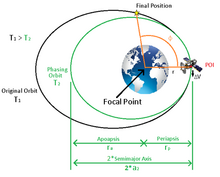
"If spacecraft is behind the final position on the same orbit, the spacecraft must slow down to enter a smaller, faster phasing orbit to catch up to the final position."
That's Counterintuitive!!!
A quick Video of me trying to figure it out and actually getting it WRONG but still finishing the mission!
I updated the Gaming List document to be more actionable. Basically i now added a methodology section as to state how it go about it. My methodology improvement is inspired by my Chinese studies as Grammar and Sentence building is formulaic just like how many narrative techniques are formulaic.
Note that It would take me a 2-3 hour uninterrupted writing session just to update all of this, among all the distractions I'm juggling. So you're going to have to wait a long while before I input: Narrative Combat Techniques - Heuristics and Procedures so that the gamers can best describe Combat in as fewer words and as little time, while maximizing its effect and engagement. These next tools is designed to educate and train ME (or any other gamer who wants to collaborate) to be able to describe action scenes (i'm drawing from my favorite authors Christian Cameron's and Bernard Cornwell's simpler techniques that I can formulate).
After reading all those books on Gaming, some have processes, few books give Actionable knowledge beyond the most basic Technique: Yes and/but/or... I will hope to correct that and give gamers Framing, Narrative, Influence, Inquiry, Analysis, Ideation, and Problem Solving procedural techniques for their game. These are techniques meant to be learned like a language - recalled and formulated without thought because of the Spaced Repetition System and Active Recall exercises.
Methodology
The methodology is written so that:
Collaborators can feedback
Corrections,
Identify steps, sequences, or elements that have reliability or risk issues.
The formula, a grammar like algorithm, will be given and its elements given definitions. In this way, like Grammar, it is a procedural processes that can be exercised and trained. Gamers who want to get better can try to exercise plugging in variables of the algorithm and working them into a narrative or descriptive or immersive exposition.
Actionable Knowledge
Giver readers action and a way to adapt to feedback and new information. Action first, then we discuss the theory where supporting experience, knowledge, and information can be organized along the theory for analysis and evaluation.
As each of these techniques are exercisable, they all depend on the use of Active recall.
Anki Deck of GMing Skills
There will be an Ankideck for this created so that gamers can work on this. The Methodology of Formula, Definition, and Examples allow that Spaced Repetition System and Cards can be created to exercise these techniques.
Challenges for the Anki Deck
Random Elements. The knowledge presented here is best used with randomly generated elements that can be filled into the formula’s variables.
Interim solution. There are many random word generators that can be used along side the anki deck. The Gaming Skills deck can be physical (as index cards) and the phone can just host the random element generators.
Core
Core Skills and Heuristics are those that are prioritized, as it has the most utility/usability and reward for the time spent learning them. The differentiation of Heuristics and Skills is so that end-users can break down a skill into component heuristics they can train in, and bundle into a skill for the future.
Heuristic
Heuristics are simple formulas or processes. Typically they are:
Zones (in Fate SRD) is a method of handling the location of a scenario or scene. Instead of working with precise details instead we work with abstract details and we try to maintain internal consistency when we declare the features of the location.
Instead of working out details like:
various measurements
relative locations of NPCs
special effects of various features
Tracking all these elements
Zones works on the principle of simplifying this with a "Yes&" approach found in many more narrative systems. It lets the players make up the other details instead of asking permission from the gm ever time to speed up play and relies on a higher skill level of improvisation and problem making ability of the GM.
Zones simplifies things to:
Scale
Abstract Features
Drawbacks to Zones
Higher Improv Skill requirement. The GM can be more likely stumped by a player when he does something clever. The GM may not be able to manage the challenge to match the expectations as easily with less control and more unpredictabillity.
Improv Skill can be practised, trained and tools prepared.
Not as Tangibly and Visually Satisfying. It takes more imagination effort to do this and it kinda throws away the hours and dollars spent on minis. Its easier if one has not "sunk cost" in the props.
Strengths of Zones
Portable. It doesn't take a lot of minis or maps to pull it off.
Less to preparation. instead of having a lot of details to communicate
Scale
Scale is describing spaces in small, medium and large. Saying it can fit a team, squad, a platoon... army, field armies, etc... Being familiar or proficient in the scales a location can take would be useful.
Typically I use the organizational scale of Armies and use the nomenclature to describe how much people can fit in a given space, how much time it takes to move, and to organize and recon surrounding spaces. Typically most game systems are in the Team scale of describing spaces and only uses the larger scales in narrative.
If a Side has up to 50% superiority in an ability as compared to another side they gain an advantage in the form a favourable modification to their TDM of 2 or a penalty to the other side's TDM of 2.
More that 100% better than the TDM is modified by 5.
Kinds of Superiority
Numbers
Movement
Position
Certain Actions
Some Superiorities Stack.
Various Terrain Features
These various terrains are the most often used. There are more but they have just minor nuances as compared to these basic features described. This should help make the use of zones easier. This has been factored using GURPS.
Open.
Open terrain is a level and accessible ground.
Movement Superiorities.
Numbers Superiorities
Broken.
Broken terrain is have small obstacles that provide cover, and sometimes concealment
Movement Superiorities. Half the bonus (round down) what can be gained in superiority.
Number Superiorities. Half the bonus (round down) what can be gained in superiority.
Other Kinds of Broken Features.
Entangling. Marshland or Bogs or ground that gives bad or worse footing.
Movement Superiority. None. movement is half or quartered.
Numbers Superiority. Half.
Bad footing penalty of -2 to -4 TDM fighting in this terrain.
Fortifying a Position negates the penalty fighting in the bad footing.
Advantage is when one is staying put to fight in entangling ground and the other party has to Move and Attack (action and position).
Concealing. This can be a temporary feature because of weather or a natural feature from the plants and the terrain itself.
-2 or -4 TDM in fighting in this terrain because of poor visibility.
Recon or Coordination action are important to use this ground. Having mastered the concealing terrain allows one to negate the penalty fighting in this ground.
Strategic Features
Scale. Determine the size of the force that can hold the strategic ground.
Numbers Superiority. only if the forces are below the scale of the strategic ground. Otherwise in large groups there is no advantage in superior numbers in strategic ground.
Movement Superiority. Movement superiority only matters in taking strategic ground first. In a contest to seize it the movement superior force has an advantage.
Position Superiority. the GM determines how much advantage does holding the superior position in the strategic ground grants.
Narrow.
Scale. Determine the size of the force that can hold the Narrow ground.
Numbers Superiority. as strategic ground.
Movement Superiority. as strategic ground.
Position Superiority. typically from 1-2 favorable advantage to TDM.
Fortified
Scale. Determine the size of the force that can hold the Narrow ground.
Numbers Superiority. as strategic ground.
Movement Superiority. as strategic ground.
Position Superiority. typically from 3 to 10 favourable advantage to TDM.
Other Superiority. depending on the other features Fortified ground can have more advantages.
High
Scale. Determine the size of the force that can hold the Narrow ground.
Numbers Superiority. as strategic ground.
Movement Superiority. as strategic ground.
Position Superiority. typically from 1-2 favourable advantage to TDM.
Ranged Superiority. higher ground grants a ranged superiority.
I stumbled on Land forms from my research on zones. I was trying to examine terrains and discovered a lot of them. Here is a list of a lot of Landforms that may be useful to expand and enrich your imagination.
In learning a skill we can break it down to concepts and ideas. Some of these components can be used with a familiarity, others components are harder and less intuitive to use and would require some understanding, and some needs a minor or petty mastery of this component.
Pacing
Pacing in storytelling can be simplified by 3 stages.
First is the establishment of the setting and expectations, pitch for the buy in of the Audience (Players), and the introduction of the main idea or challenge.
Second is the rise in challenge, events that engages the audience with the challenges and elements that invest them into the story. Minor to Major Conflicts occur in this stage. In extended Stories, twists occur that go back to the First Stage and proceed to the Second Stage.
Third is the Climax and Closure of the story. In extended stories a reletively lesser climax but the absence of closure occurs in every stage.
Pacing Informs the GM (and the Players) what they need to get done or what is the next action (or what needs to happen next). Its a broad goal that gets narrower as we go from Acts to Scenes, and to Player Scenes.
Mastery of Pacing is the ability to recognize Story Elements and put them where they best fit in context of the Players, the PCs, and the Story as a whole. It also means the GM can generate more ideas that are better suited for each stage of Pacing. Such a master can tell if his players have been emotionaly set up for the goals of the pacing stage. Finaly a master in pacing has some clue to give closure.
Closure.
Closure is a very difficult technique to master because it really is different per player. Closure is a very important technique because it is, to my experience, what makes the ends of my games not as satisfying even if I seem to have "closed the loops" in everyone's story.
What I missed is that Closure is personal to the Player and his Character. It is something we learn during the Second part of Pacing as we adapt and learn more about the PC or Player's mindset.
My default strategy for getting closure is keeping good notes on the player's mood and RP, as well as always keep having feed back to check if any of the PC's/Players motives and expectations change. So keep good notes and keep being in touch with the players. As I'm just barely understanding Closure I'm still far from petty mastery of this.
What is closure for this Element of the Character?
What is closure for this Player's goal?
What is closure in context of the story for this character? What is the character in light of his actions in the events? What is the narrative the Player will like to cap-off or push (and enable him to do so).
For those who are trying to avoid narrative bias and are suspicious of stories (See Tyler Cowen's TED talk) and are working towards accepting "the Mess" closure is exploiting the bias in light of the mess.
Acts are components of a Game Session which fit into each Stage of Pacing. A 3-Act, 5-Act, and 7 Act game sessions follow the Pacing Guideliness but change in scale.
In a 3-Act Sessions there is the 3 stages of Pacing which is what a 2-4 hour session can probably accomplish.
Personal note: the 3-Act session is what I can do reliably. I can even sometimes "fudge it" to feel like I squeezed it enough lows and highs to feel like a 5-act (but those are on rare days).
In a 5-Act session the first 3 acts follow the 3-Act staging but the 2nd and 3rd act are smaller in scale/gravity than the 4th and 5th act. The 3rd-Act can be a minor Climax that bleeds into a twist that creates a new paradigm, set of expectations, and round of buy in for the players. The 4th Act is a higher scaled rising tension and conflict. A 5-Act can be a 4-6 hour session. Its possible for a GM to improvise an additional amount of Acts if so much is getting done and the players are excited for more!
Personal note: in my older age I can't do 5-Act easily, last time I did so it took my out and I needed a nap. I had my fitbit and my BPM was about 80 and I could feel my brain fps was hitting 60.
7, 9, or 11 Acts are pretty much the same fractal pattern of pacing. Because of Bounded rationality not a lot of GMs have the processing power to create enough material for greater number of acts without railroading. There is a lot of cooperation with the players in making more acts per session.
A Scene is a sub-stage of an Act. A scene can be as long as an combat or social encounter or a problem solving challenge. This is what 10-30 minutes of exchanges between Players and the GM when they are trying to push the story forward.
This is handy concept because it lets a GM plan exchanges with the Players. I use a Scene to hit goals regarding: the PC's background, PC's chance to shine in his role, establishing key clues and events, and other such milestones the GM needs to accomplish to Build up the adventure and let the Players feel empowered to act with their characters.
I use the Pacing Grid for this purpose* I normally plan in Acts and Scenes. In every Act I Ideate the problems/challenges/fronts*** and have a ready supply of these to use for Scenes. The way I frame a Scene is based on the Act. The PCs having Agency in the First Act is different from the other Act. Their actions, their effect on their surroundings and people, and the way the world transforms is guided by the Pacing process.
Player Scene**
This is similar to a Sequence (filmmaking). These are the exchanges between the GM and the Players. I can't really plan to this level of detail. Al I can do is keep score to see if the Player is enjoying himself and getting the agency he needs to move his character's goals forward.
(Elevator) Pitch Speed. This is the speed of compressing an Idea and breaking it up to digestible portions for the listener to consume in their own pace and sequence. This is typically 30-90 seconds, but can be faster when there is a lot of shared understanding already, strong familiarity with both parties in their communication styles, and an established protocol when dealing with communication bottle necks. (Yes& is one of these protocols).
Note Taking
Session (Episode) 02, Act 2/3, Scene 1/3, John's 2nd
or for shorthand: E2, A2/3, S1/3, John2.
Conclusion
This is an update to my understanding and finding better ways to communicate the ideas. I've also had time to digest and reflect on it considerably. Having a familiarization or almost working undersanding of this concept is helping me keep better notes and track my Player's emotions better (I have recordings of my games which allow me to revisit its pains and pleasures).